
Commercial Drainage Staplehurst
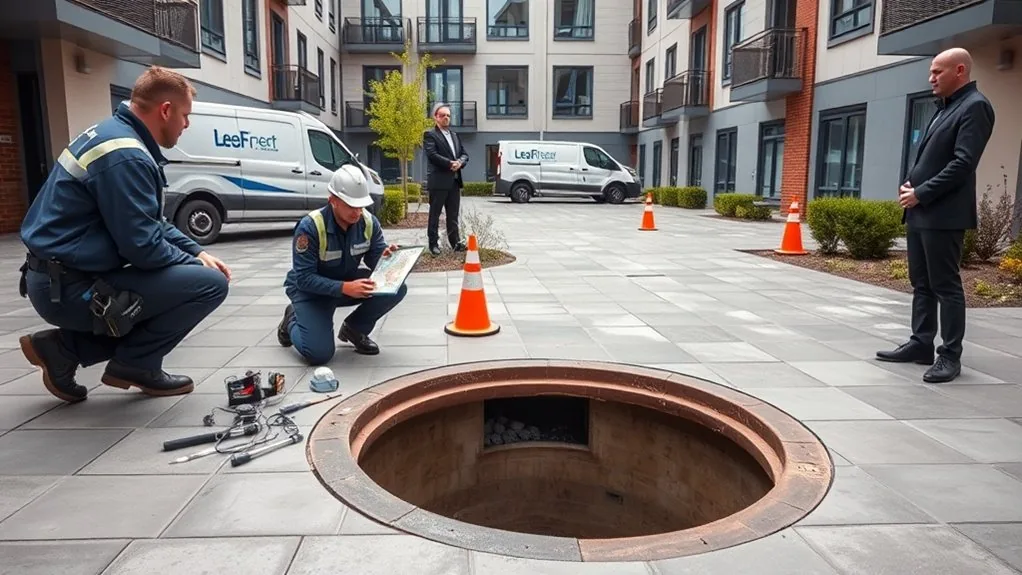
Blocked or damaged drainage can disrupt your tenants, risk rental income, and cause issues with insurers.
Effective management requires more than just clearing blockages – including CCTV surveys, planned maintenance, and no-dig repairs to prevent flooding and odours.
Contact us for a fast quote or emergency callout across Staplehurst.
From overflowing gutters on Victorian terraces to root‑blocked sewers on newer estates, drainage issues pose significant financial and legal risks for Staplehurst landlords. You’re responsible for ensuring your drainage infrastructure performs safely, efficiently, and in line with UK regulations and insurers’ requirements. Failure can trigger property damage, tenant claims, environmental offences, and costly emergency callouts.
You also face hidden liabilities: misconnected drains, inadequate groundwater management, and undersized systems struggling with intense rainfall. These can undermine foundations, flood basements, and invalidate policies if you’ve not taken reasonable preventative steps.
A proactive regime—asset mapping, scheduled CCTV surveys, condition grading, and hydraulic assessment—helps you evidence compliance, budget for remedial works, and protect yield. It also supports smoother lease management and fewer disputes with occupiers.
Whether you manage a Victorian conversion in Canterbury or a coastal block in Folkestone, the same core drainage problems tend to recur in Staplehurst’s multi‑occupancy buildings. You’re typically dealing with ageing pipework, shared stacks, and limited access for inspection. Historical drain issues are common, especially where original clay or pitch‑fibre lines still serve multiple flats and haven’t been mapped properly.
| Problem | What you’ll typically notice |
|---|---|
| Repeated blockages | Slow sinks, backing‑up WCs |
| Collapsed or cracked laterals | Localised flooding, foul odours |
| Root ingress | Seasonal blockages after rainfall |
| Misconnected appliances | Cross‑contamination, surcharge risks |
| Undersized/obsolete pipework | Regular overload during heavy storms |
To protect your asset, you’ll often need targeted CCTV surveys and planned drainage system upgrades, not just one‑off clearance.
Because drainage issues in Staplehurst blocks tend to be systemic rather than isolated, essential commercial drainage services focus on diagnosing root causes and implementing durable fixes, not just clearing symptoms. You need end‑to‑end support that integrates with wider urban infrastructure, protects your buildings, and limits disruption to tenants.
Core services typically include CCTV drain surveys to map pipe conditions, targeted jetting and mechanical descaling, and structural lining to repair damaged runs without excavation. Planned preventative maintenance schedules reduce emergency callouts and insurance risk. Surface‑water management—gully cleaning, ACO channel maintenance, and car‑park drainage optimisation—prevents flooding and slip hazards.
Where foul drainage connects to on‑site water treatment or interceptors, you’ll rely on compliant cleaning, sampling, and performance checks to meet regulatory standards.
How do you cut through similar‑sounding promises and identify a commercial drainage contractor who’ll actually protect your Staplehurst assets long term? Start by checking contractor credentials: relevant drainage qualifications, CHAS or Constructionline, public liability insurance, and evidence of health and safety competence for occupied buildings.
Evaluate their drainage technology. You’ll want CCTV survey systems, high‑pressure water jetting, no‑dig repair methods, and electronic mapping so you’re not paying for guesswork or unnecessary excavation.
Ask for case studies from similar Staplehurst properties—retail parks, HMOs, office blocks—and confirm 24/7 engineer availability with guaranteed response times. Scrutinise reporting standards: clear defect coding, prioritised repair recommendations, and transparent pricing. Finally, ensure they communicate in plain language, with a named account contact responsible for keeping disruption to tenants minimal.
If you own rental property in Staplehurst, a planned drainage maintenance schedule isn’t a “nice‑to‑have” – it’s one of the most effective ways to protect your buildings, cashflow, and compliance position. By mapping every asset (gullies, manholes, laterals, stacks) and agreeing inspection intervals, you’ll turn drainage from a reactive cost into a controlled, predictable line in your budget.
Routine CCTV surveys, descaling, and root cutting let you detect structural defects early and plan targeted drainage system upgrades instead of full replacements. You’ll also reduce blockages that can damage finishes and inconvenience tenants.
A good maintenance plan should integrate eco friendly drainage measures – such as debris‑traps, efficient pumps, and silt management – to minimise environmental impact and support your ESG commitments.
When a drain fails on your Staplehurst site, you need rapid emergency response protocols that restore flow and protect assets with minimal delay. By planning clear procedures in advance, you’ll guarantee operational disruption, safeguard health and safety, and keep trading or production as close to normal as possible. Effective coordination with your onsite teams ensures engineers arrive fully briefed, work in defined zones, and complete repairs with the least interruption to your operations.
Because drainage failures can escalate in minutes, rapid emergency response protocols are vital to protect your Staplehurst property from flooding, contamination, and costly downtime. You need clear, tested Emergency preparedness measures, not ad‑hoc reactions. That starts with a 24/7 reporting channel, predefined incident categories (blockage, collapse, surcharging, contamination), and trigger thresholds for immediate deployment.
Your provider should maintain an updated asset register, site access instructions, and isolation points so engineers arrive ready to act, not assess. Effective Response coordination ensures call handlers, field teams, and decision‑makers share real‑time information, including photos, CCTV findings, and risk assessments. Pre‑approved method statements and permits then allow work to begin at once, containing damage and restoring safe, compliant drainage performance quickly.
Even in a well‑maintained system, drainage failures can stall your operations, disrupt staff and customers, and expose you to compliance risks, so the priority must be to keep your site functioning safely while repairs are carried out. You need a plan that stabilises the situation fast, isolates affected areas, and keeps core facilities open.
Using advanced drainage technology – such as CCTV diagnostics, root‑cutting, and high‑pressure water jetting – your contractor can pinpoint faults quickly and complete targeted repairs, reducing downtime and unnecessary excavation. Temporary pumping, over‑pumping lines, and interim waste‑holding solutions help you maintain critical services during works.
Throughout, you should assess environmental impact: containing contaminated flows, preventing overflows to surface water, and ensuring all waste is removed, treated, and documented correctly.
Although the technical fix is critical, drainage emergencies are managed best through tight coordination between your onsite teams and your drainage contractor. You need clear roles, fast decision‑making, and disciplined onsite collaboration so engineers can access problem areas immediately and work safely around staff, tenants, and visitors.
Before issues occur, agree escalation routes, preferred access points, and shutdown procedures. During an incident, prioritise team communication: one onsite contact should brief engineers, update stakeholders, and manage tenant expectations.
| Focus Area | Practical Action |
|---|---|
| Incident lead | Nominate a 24/7 responsible person |
| Access control | Pre‑authorise engineer site access |
| Asset data | Maintain updated drainage schematics |
| Downtime plan | Define service switch‑overs and workarounds |
| Post‑incident review | Capture lessons and refine protocols |
When you’re responsible for a commercial property in Staplehurst, your drainage system isn’t just an operational concern; it’s a legal and safety obligation. You must evidence legal compliance with environmental, health and safety, and water industry regulations, ensuring pipework, interceptors, and gullies operate without causing pollution, flooding, or hygiene risks to occupants and the public.
Your insurance requirements will typically demand documented inspections, maintenance logs, and rapid response to identified defects. If you can’t prove you’ve met these standards, you may face rejected claims or liability for consequential losses.
A specialist commercial drainage partner helps you benchmark current systems, schedule statutory inspections, and implement corrective works. This keeps you aligned with landlord duties, reduces risk exposure, and protects tenant operations.
If you’re under pressure to control facilities budgets, drainage is one area where smart planning can stop minor issues turning into capital‑level repairs. You need clear visibility of asset condition, risk and lifecycle so you can prioritise works on cost efficiency, not crisis.
A structured maintenance plan, built around CCTV surveys and condition grading, lets you phase remedials, align them with lease events, and protect service‑charge recovery. Robust budgeting strategies mean separating statutory, risk‑critical and cosmetic works, then agreeing spend thresholds and approval routes.
A Staplehurst‑focused drainage partner can benchmark local costs, propose value‑engineered repairs, and schedule works to minimise operational downtime. That way, you’re treating drainage as a managed asset, not an emergency cost centre.
To keep your Staplehurst premises operating smoothly, you’ll want a straightforward plan for regular drain maintenance, preventing blockages, and managing seasonal checks. By controlling what enters your drains, scheduling routine inspections, and preparing for heavier winter rainfall, you reduce the risk of unexpected failures and costly disruption. Let’s outline the practical steps you can take on-site, and where professional support adds measurable value.
Although it’s easy to overlook drains while day‑to‑day operations take priority, regular maintenance is one of the most cost‑effective ways to protect your Staplehurst property from blockages, foul odours, and unexpected downtime. A structured programme of drain cleaning keeps pipework clear of accumulated silt, scale, and organic residue, helping you maintain full flow capacity and consistent performance across multi‑unit buildings.
You should also schedule periodic pipe inspection using CCTV technology. This lets you identify fractures, minor root ingress, or joint displacement before they escalate into leaks, flooding, or structural damage. By combining routine drain cleaning with documented inspections, you’ll extend asset life, support compliance with environmental and health regulations, and give tenants confidence that essential services are being proactively managed, not reactively patched.
When you understand what actually causes most drain blockages in Staplehurst’s commercial properties, preventing them becomes straightforward and far cheaper than emergency call‑outs. You’re mainly dealing with three issues: accumulated fats, oils and grease, inappropriate items in toilets, and root intrusion into older pipework.
Control what enters your system: install and maintain grease traps in commercial kitchens, use sink strainers, and provide clear tenant guidance on what mustn’t be flushed. In plant‑heavy sites, schedule periodic CCTV surveys to identify early root intrusion before it fractures or displaces pipes.
Monitor flow performance: slow drainage, gurgling sounds, and recurring water backups from low‑level fixtures indicate developing restrictions. When you see these early warning signs, arrange prompt professional jetting or mechanical cleaning to restore full bore capacity.
Preventing everyday blockages is only half the job; you also need seasonal checks that match how Staplehurst’s weather stresses your drainage. You’re managing risk from heavy coastal rain, leaf fall, summer ground movement, and winter frost, so structured seasonal inspections are essential for Weather preparedness and asset protection.
| Season / Checkpoint | Priority Actions |
|---|---|
| Early Spring | CCTV survey for winter damage; jet lines; test sump pumps. |
| Late Spring / Early Summer | Clear interceptors; descale urinals; check surface channel gradients. |
| Autumn (pre‑storm) | Gutter and downpipe clearance; leaf guards; inspect car park drains. |
| Early Winter | Insulate exposed pipework; verify trace heating; confirm emergency call-out plan. |
Legal and structural drainage maintenance should be the responsibility of the landlord. Managing agents should handle day-to-day operational tasks such as routine inspections, minor blockage resolution, contractor coordination, and record-keeping. The management agreement must clearly define the scope, response times, budgets, and reporting duties to prevent disputes and ensure ongoing compliance with Staplehurst and UK regulations.
The handover pack should include clear drawings of the drainage system design and the locations of manholes, interceptors, and pump stations. It must also specify any capacity limits of the system. Maintenance schedules, responsibilities for reactive and planned works, emergency contacts, and reporting procedures should be provided. Rules on acceptable discharges, grease and trade-effluent controls, and access arrangements for contractors must be included to prevent blockages and ensure compliance.
Yes, smart monitoring technology can reduce drainage issues in multi-let Staplehurst properties. It uses sensors to provide real-time data on flow, blockages, and surcharging. This allows early detection of problems and timely maintenance, which helps lower emergency callouts and supports service charge reporting and asset planning.
Drainage problems increase commercial property insurance premiums in Staplehurst because they raise the risk of flooding, subsidence, and business interruption. Insurers consider past claims, poor drainage maintenance, and inadequate repairs when setting premiums. Carrying out regular CCTV surveys, jetting, and documented repairs can help you qualify for insurance discounts. You should keep records of your maintenance schedule, contractor reports, and upgrades to negotiate better terms and protect your asset’s value.
On-site caretakers should be trained to recognise early signs of drainage faults through structured drainage maintenance instruction. They need practical skills such as reading site drainage plans and identifying issues like slow drains, gurgling sounds, odours, damp patches, and manhole surcharge. Training should also cover basic CCTV survey awareness, safe use of drain rods, logging findings, and escalation protocols. Regular toolbox talks and scenario-based drills help maintain observational skills and reduce response times to drainage problems.